
Vehicles and equipment on hire purchase, lease or contract hire belong to the finance company, not your company. A winding-up petition usually entitles the finance company to end the agreement and take them back, and the instalments themselves are caught by section 127. If a winding-up order is made, the finance company collects its goods and claims any shortfall, often from a director's personal guarantee. Directors also ask "will the finance company take our vans if we get a winding-up petition?", "can I keep paying the lease on the company car?" and "what happens to vehicles on finance when a company goes into liquidation?". This page explains what happens at each stage and how to keep the vehicles the business needs.
Petition served and vans or kit on finance? Free initial consultation with a Solicitor: call 07361 999123 or text DIRAID to 82228.
Your free call is with a Solicitor. Have the petition to hand if you can.
Text DIRAID to 82228and we will call you back
Or call us on 07361 999123
First consultation free · No obligation · Nothing to lose
Who owns what
Start by sorting the company's vehicles and equipment into three groups, because each is treated differently.
| Type of agreement | Who owns the goods | What the petition means |
|---|---|---|
| Hire purchase, conditional sale | The finance company, until the last payment (and any option fee) is made | The agreement can usually be terminated and the goods recovered |
| Finance lease, operating lease, contract hire | The finance or leasing company, throughout | The same: the goods go back on termination |
| Bought outright, or with a loan secured by a charge | The company | The goods are company assets. Selling them after presentation is void if an order follows, unless the court validates the sale |
Check the agreements themselves. The schedule lists the goods, the terms list the events of default, and the guarantee, if there is one, is usually signed on a separate page.
Can the finance company end the agreement?
Usually, yes. Most business finance agreements list the presentation of a winding-up petition, or its advertisement, as an event of default. The finance company can then end the agreement, demand the arrears and its loss under the agreement, and repossess. In practice many do not act on presentation alone, because an advertised petition is the usual trigger: the advertisement is public and finance companies watch for it.
The rules that stop suppliers ending contracts because a customer enters an insolvency procedure (section 233B Insolvency Act 1986) rarely help here. A petition on its own is not one of the procedures they cover, and contracts for lending and financial leasing are excluded from them.
Companies also do not have the consumer protections that apply to individuals on hire purchase, such as the right to hand the goods back once half the price has been paid. The agreement's own terms govern.
Paying the instalments while the petition is pending
Every payment out of the company's property after the petition was presented is void if a winding-up order follows, unless the court validates it (section 127). That includes finance instalments. In practice:
- the bank will often freeze the account once it learns of the petition, so direct debits to finance companies may fail. A missed payment is a second default; see bank account frozen after a winding-up petition;
- if the vehicles are needed to trade, ongoing finance payments can be included in an application for a validation order, which gives them the court's approval;
- if the petition is paid, withdrawn or dismissed, payments made in the meantime are not affected, because section 127 bites only if an order is made.
Keeping the vehicles the business needs
- Talk to the finance companies early. Tell them the petition is being dealt with, and how. A finance company that hears from you first, with a credible plan, is less likely to terminate on advertisement.
- Deal with the petition itself. The vehicles are only safe once the petition is paid, withdrawn or dismissed; see how to stop a winding-up petition.
- Apply for a validation order if the company is solvent or has a realistic plan, covering the finance payments with the wages and supplies.
- Keep the vehicles insured, taxed and maintained. A lapse in insurance is usually a separate breach of the agreement.
After a winding-up order
The Official Receiver becomes liquidator. Directors' powers end, and the company's vehicles and equipment come under the liquidator's control.
- Goods on finance are collected by the finance company, usually by arrangement with the liquidator. If a vehicle is worth more than the settlement figure, the liquidator may pay off the finance and sell it, so that the surplus goes to the company's creditors.
- Vehicles the company owns are sold by the liquidator. A director who wants to buy one must pay a proper price; buying assets cheaply from the company you ran invites challenge later. See can I buy the business back from the liquidator?
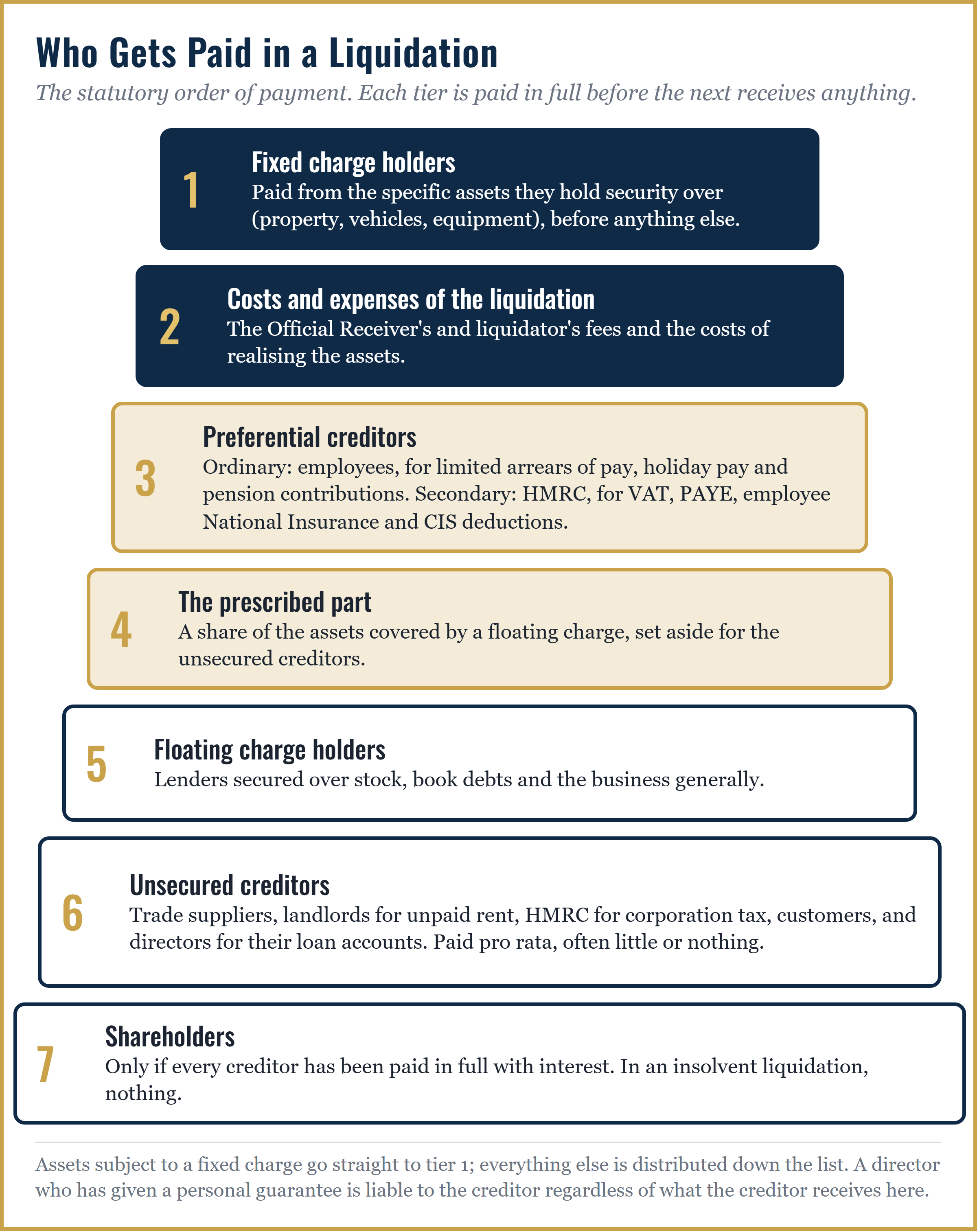
- Any shortfall the finance company claims under the agreement becomes an unsecured claim in the liquidation.
- A charge over a company vehicle that should have been registered at Companies House within 21 days, and was not, is void against the liquidator.
The wider position for leases and contracts is in what happens to the company's contracts, lease and staff after a winding-up order?
DO NOT sell, transfer or hide a vehicle that is on finance. The company does not own it, and disposing of it exposes the company and you to claims from the finance company. DO NOT move company-owned vehicles into a new company or your own name after the petition: the transfer is void if an order follows unless the court validates it, and the liquidator will investigate it.
What it means for you personally
Asset finance to small companies is very often personally guaranteed by a director. If the agreement is terminated and the goods sold at auction for less than the balance, the finance company can usually claim the shortfall from you under the guarantee, whether or not the company is wound up. Look for the guarantee now, and see what happens to my personal guarantee after a winding-up petition?
If you drive a company car on finance, you have no right to keep it after an order. The company's interest passes to the liquidator, and the car goes back to the finance company unless a new agreement is made with it.
 From The Winding-Up Petition Handbook, free for directors.
Key points
- Vehicles and equipment on hire purchase, lease or contract hire belong to the finance company.
- Most agreements treat a winding-up petition, or its advertisement, as a default allowing termination and repossession.
- Instalments paid from the company's account after presentation are void if an order follows unless validated; a validation order can cover them.
- After an order, the finance company collects its goods and the liquidator sells company-owned vehicles.
- A director's personal guarantee usually survives and covers any shortfall.
Frequently asked questions
Will the finance company take our vans if we get a winding-up petition? It may: most agreements allow termination once a petition is presented or advertised, though many finance companies wait to see whether the petition is resolved.
Can I keep paying the lease on the company car? Payments from the company's account after presentation are void if a winding-up order follows unless the court validates them; a validation order can cover payments the business needs.
What happens to vehicles on finance when a company goes into liquidation? The finance company collects them, or the liquidator settles the finance and sells a vehicle worth more than the balance; any shortfall is an unsecured claim.
Can I buy my company van from the liquidator? Usually yes, at a proper price agreed with the liquidator, and with the finance company's agreement where the van is on finance.
Free initial consultation for directors facing a winding-up petition. Call 07361 999123, text DIRAID to 82228, or request a call back.