
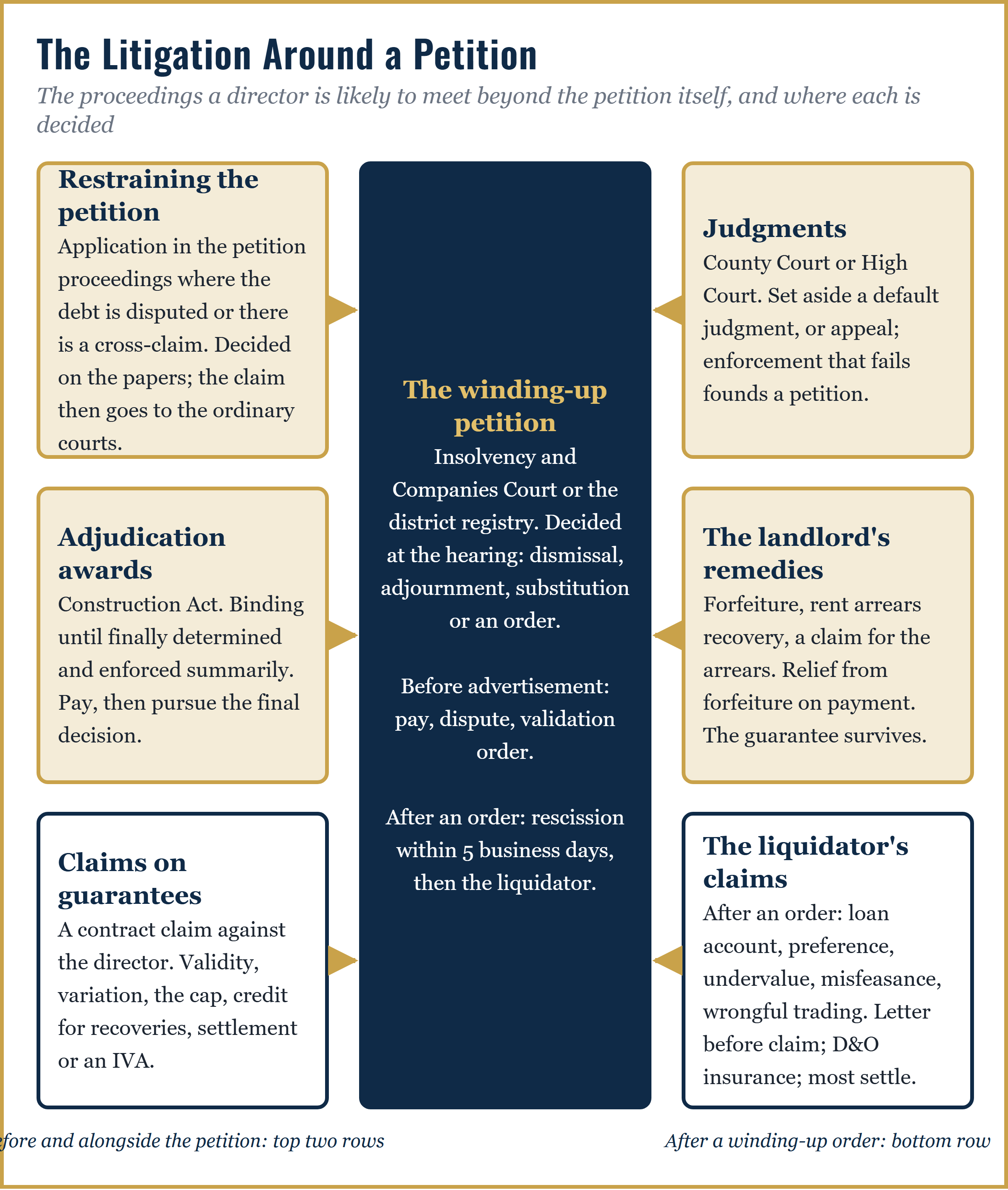
A liquidator's claim is an ordinary piece of litigation with a particular shape: the liquidator has the company's records and a duty to recover money for creditors, and the director has the evidence of what they knew and did, which is what decides it. The claims a director meets are for an overdrawn loan account, for a preference or a transaction at an undervalue, for misfeasance, and for wrongful trading. Each has its own elements and defences; all of them turn on documents and dates; and most are settled once each side has seen the other's evidence, because liquidators are funded from the estate or by litigation funders and weigh cost against recovery. Directors also ask "can a liquidator sue a director personally?", "what claims can a liquidator bring against a director?" and "what should I expect from the liquidator after the company is wound up?".
The letter before claim
The first step is usually a letter from the liquidator or their solicitors setting out the claim and asking for information or payment. Respond, through advice, within the time given: a reasoned response with documents often narrows or ends a claim before proceedings. Do not ignore it, and do not volunteer a narrative before the documents have been reviewed.
The claims and their defences
- Loan account: a debt the director owes the company. Defences are limited to the figure (salary or expenses wrongly posted, dividends validly declared from distributable profits) and set-off.
- Preference: the liquidator must show the payment put the creditor in a better position, within the period, while the company could not pay its debts, and was influenced by a desire to prefer (presumed for connected persons). Commercial pressure, a genuine belief the company was solvent, or payment in the ordinary course for continued supply are the usual answers.
- Transaction at an undervalue: the liquidator must show the value gap and insolvency at the time (presumed for connected persons). Evidence of a proper valuation and a commercial purpose is the answer.
- Misfeasance: breach of duty causing loss. The question is what a reasonable director would have done; advice taken and minuted is the strongest evidence.
- Wrongful trading: the liquidator must identify the date on which the director knew or ought to have concluded that insolvent liquidation could not reasonably be avoided, and show that the loss to creditors increased after it. The defence is that the director took every step to minimise the loss: the board minutes, the advice, the decisions to stop taking credit, the attempts to sell or restructure.
How far back the liquidator can look
| Claim | Period |
|---|---|
| Preference (section 239) | 6 months before the onset of insolvency, or 2 years if the creditor preferred was connected with the company, such as a director |
| Transaction at an undervalue (section 238) | 2 years before the onset of insolvency |
| Wrongful trading (section 214) | From the date the director knew or ought to have concluded insolvent liquidation could not reasonably be avoided |
| Misfeasance (section 212) and loan accounts | Any breach of duty or debt still within the ordinary time limits for claims |
In a compulsory liquidation the onset of insolvency is usually the date the winding-up petition was presented, so a petition fixes the start of the look-back period. See what happens to directors in liquidation and overdrawn director's loan account.
Insurance
Check whether the company had directors' and officers' insurance and notify the insurer at once; many policies cover defence costs for these claims, subject to their terms and exclusions.
Settlement and disqualification
Most claims settle. A settlement does not of itself prevent disqualification proceedings, which are brought by the Insolvency Service on the same facts, but a director who has engaged with the liquidator and compensated the estate is in a better position on both.
From The Winding-Up Petition Handbook, free for directors.
What to do now
- Take advice before replying to the liquidator's letter.
- Gather your own records: minutes, correspondence, advice, bank statements.
- Notify any insurer.
- Reply within the time given, with documents, and keep the tone professional; the liquidator is doing their job.
Key points
- A liquidator can sue a director personally for loan accounts, preferences, undervalue transactions, misfeasance and wrongful trading.
- Preferences to connected people can be looked at for 2 years before the onset of insolvency; undervalue transactions for 2 years.
- The first step is usually a letter before claim: respond through advice, with documents, within the time given.
- Check for directors' and officers' insurance and notify the insurer at once.
- Most claims settle, but settlement does not of itself stop disqualification proceedings.
Frequently asked questions
Can a liquidator sue a director personally? Yes. A liquidator can bring claims against a director personally for an overdrawn loan account, preferences, transactions at an undervalue, misfeasance and wrongful trading, and can ask the court to order the director to contribute to the company's assets.
What must a liquidator prove for wrongful trading? That at an identified date the director knew or ought to have concluded there was no reasonable prospect of avoiding insolvent liquidation, that trading continued, and that the creditors' loss increased as a result; and the director can show they took every step to minimise that loss.
Does directors' and officers' insurance cover a liquidator's claim? Often it covers defence costs and sometimes the claim, subject to the policy's terms and exclusions. Notify the insurer as soon as a claim is intimated.
Will settling with the liquidator stop disqualification? Not by itself. Disqualification proceedings are brought by the Insolvency Service on the same facts, but engagement and compensation of the estate count in the director's favour.
Free initial consultation for directors facing a winding-up petition. Call 07361 999123, text DIRAID to 82228, or request a call back.
Your free call is with a Solicitor. Have the petition to hand if you can.
Text DIRAID to 82228and we will call you back
Or call us on 07361 999123
First consultation free · No obligation · Nothing to lose