
You have three weeks from service, and the right response depends on whether the debt is owed. A statutory demand is a formal written demand for more than £750. If it is not paid, secured or compounded for within three weeks of being served at the registered office, the creditor can treat the company as unable to pay its debts and present a winding-up petition. A company cannot apply to set a statutory demand aside, so the choice is to pay, to agree terms the creditor accepts, or, if the debt is genuinely disputed, to say so in writing at once and apply for an injunction restraining the creditor from presenting a petition.
Check your demand now with the free statutory demand checker: your deadline, your earliest petition date, what looks wrong, and what to do. Nothing you enter is stored or sent.
Your free call is with a Solicitor. Have the petition to hand if you can.
Text DIRAID to 82228and we will call you back
Or call us on 07361 999123
First consultation free · No obligation · Nothing to lose
If the debt is owed
See paying, securing or compounding a statutory demand. Pay within the three weeks, or agree terms in writing with evidence of funds, and obtain written confirmation that no petition will be presented. A creditor who has gone to the trouble of a statutory demand will usually accept payment and reasonable costs. If the company cannot pay this debt, it probably cannot pay others, and this is the moment to take advice on the wider options while they are all available without a court application.
If the debt is disputed
See how to dispute a statutory demand.
- Write to the creditor immediately setting out the dispute, with the documents, and requiring an undertaking not to present a petition.
- If the creditor will not give it, apply to the court for an injunction restraining presentation. The test is whether the debt is genuinely disputed on substantial grounds, or the company has a genuine cross-claim of at least the same amount.
- If only part is disputed, pay the undisputed part (from third-party funds if the company's own position is uncertain) and dispute the rest.
What the demand must contain
The demand must contain the information the Insolvency Rules require: the amount, how it arises, the creditor's details, and the consequences of non-payment. A demand for £750 or less, or one that is defective, does not found a petition, but do not rely on defects alone: a creditor can simply petition on the unpaid debt. See mistakes in a statutory demand.
Common mistakes
Ignoring it because "they'll never actually do it"; paying part without agreeing what happens to the rest; disputing the debt for the first time after the petition arrives; and leaving the registered office somewhere the petition will not be seen.
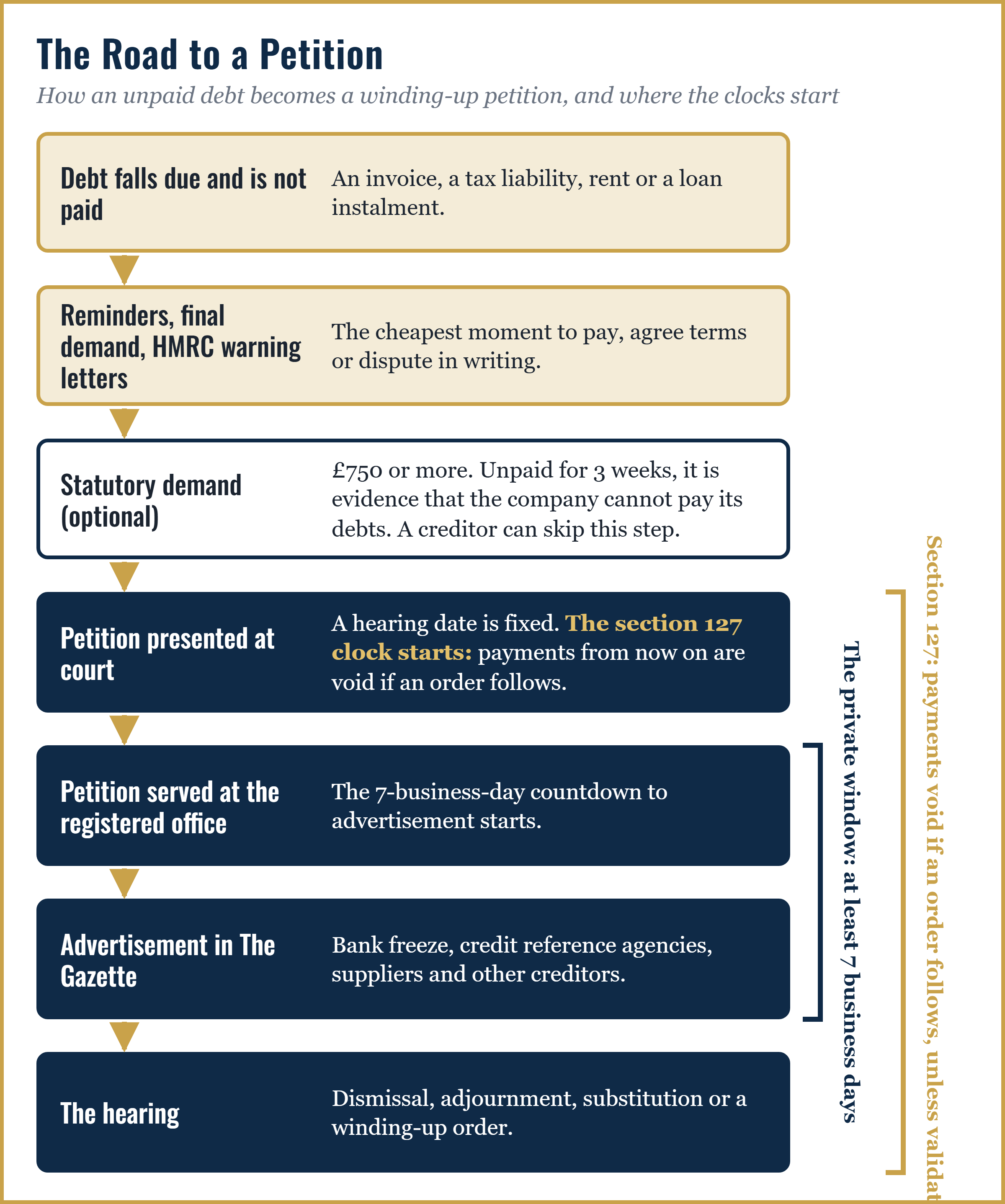
From The Winding-Up Petition Handbook, free for directors.
What to do today
- Record the date of service and count three weeks (when to respond explains how).
- Reconcile the debt.
- Respond in writing within days.
- Check the registered office.
Free initial consultation for directors facing a winding-up petition. Call 07361 999123, text DIRAID to 82228, or request a call back.